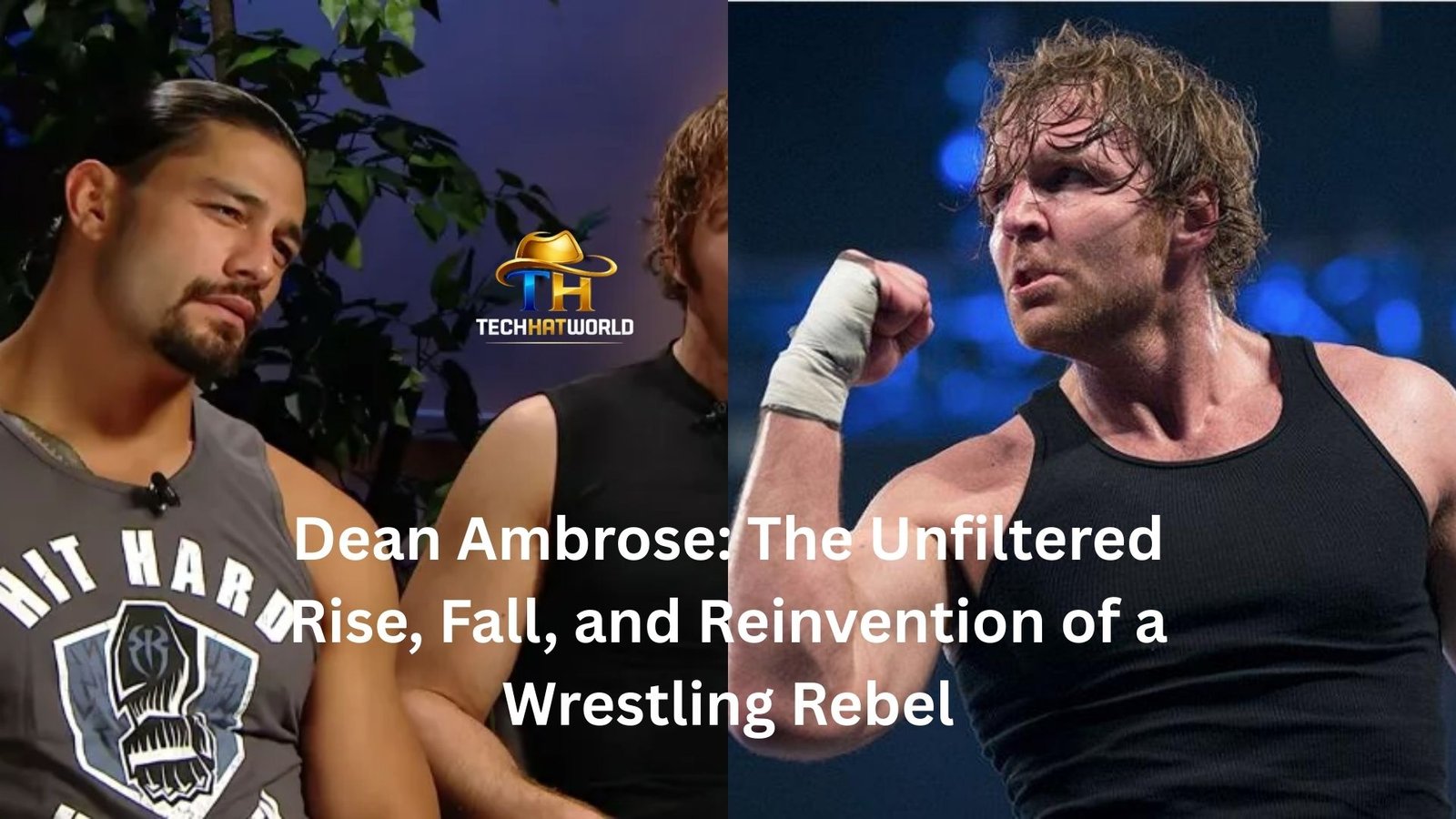
Dean Ambrose was never built to be polished.
From the first time he stepped through the ropes in WWE, there was something different about him. He didn’t look like the typical poster-boy superstar. He didn’t move like a rehearsed action figure. He felt unpredictable. Dangerous, even. And that’s exactly why people couldn’t look away.
If you watched wrestling in the 2010s, you didn’t just see Dean Ambrose. You felt him. The messy hair. The crooked smirk. The way he paced around the ring like he was barely holding it together. He made chaos look natural.
But the real story of Dean Ambrose isn’t just about wild promos and hardcore matches. It’s about reinvention, creative frustration, risk-taking, and what happens when a performer decides to stop fitting into someone else’s mold.
The Early Days: Grit Before Glamour
Before the big arenas and television lights, Ambrose was grinding it out on the independent circuit as Jon Moxley. That’s important. Because the “Dean Ambrose” character didn’t come from nowhere. It grew out of years spent wrestling in small gyms, VFW halls, and venues where maybe 100 people showed up on a good night.
Those early matches were raw. Sometimes bloody. Often uncomfortable. He leaned into that unhinged energy because it felt authentic. Fans who followed his indie work knew he wasn’t just playing a character. There was a hunger there.
And that hunger translated when he signed with WWE in 2011.
He debuted as part of The Shield alongside Seth Rollins and Roman Reigns. Now, here’s the thing: factions in wrestling can be hit or miss. Some feel forced. The Shield didn’t. From the black tactical gear to the way they stormed through the crowd, they felt like a real threat.
Ambrose quickly became the unpredictable mouthpiece of the group. Rollins was the athletic one. Reigns was the powerhouse. Ambrose? He was the loose cannon.
That role fit like a glove.
The Shield Breakup and the Lone Wolf Era
When The Shield eventually imploded, fans were split. Part of the magic was gone. But it also opened the door.
Ambrose stepped into singles competition with momentum. He carried the United States Championship for nearly a year. He had intense feuds. He cut promos that didn’t sound scripted, even if they were. And he wrestled like a guy who’d rather fight in a back alley than a sports arena.
There was one stretch in particular where it felt like he was on the verge of becoming the top guy. Not just popular. Not just over with hardcore fans. The face of the company.
Let’s be honest: he connected with people because he didn’t feel manufactured. He wasn’t the clean-cut hero. He wasn’t the perfectly built villain. He felt like the friend who shows up late, says something outrageous, but somehow always backs it up.
When he won the WWE Championship in 2016, cashing in Money in the Bank on the same night, it felt earned. Organic. The crowd reaction wasn’t polite applause. It was release.
But that peak didn’t last.
Creative Frustration and the Turning Point
Here’s where the story gets complicated.
As time went on, the character of Dean Ambrose started to shift. The “lunatic fringe” persona became more exaggerated. Comedy segments crept in. Silly props. Forced jokes. There were moments where you could almost see the disconnect between performer and material.
If you’ve ever had a job where your boss told you to act like someone you’re not, you get it. That tension builds. Slowly. Quietly.
By 2018 and early 2019, something felt off. Promos didn’t hit the same. Feuds felt repetitive. The edge that once defined him seemed dulled.
Then came the surprise announcement: he wouldn’t be renewing his contract.
In an industry where top stars rarely walk away voluntarily, that move mattered. It wasn’t a dramatic exit. It was quiet. Almost understated. But it spoke volumes.
Sometimes the boldest thing you can do is leave.
The Return of Jon Moxley
When he showed up in All Elite Wrestling as Jon Moxley, it felt like a reset button had been pressed.
Gone was the forced zaniness. Back was the intensity. The grit. The guy who looked like he’d rather bleed than fake a smile.
And the difference was immediate.
Moxley wasn’t trying to be mainstream-friendly. He leaned into violent matches. He brought back that indie-style realism that made his early career so compelling. Promos sounded less scripted and more like confessions. He talked about freedom, about fighting because he loved it, not because he was told to.
It resonated.
During AEW’s early years, Moxley became one of its anchors. He carried the championship during uncertain times. He wrestled through injuries. He showed up when stability was needed.
There’s something admirable about that. Especially in an industry built on spectacle.
The Appeal of Controlled Chaos
Why did Dean Ambrose — or Jon Moxley — connect so deeply with fans?
Part of it is the archetype. Every era of wrestling has its rebel. The anti-hero who doesn’t quite follow the rules but still earns your respect. Think Stone Cold Steve Austin. Think CM Punk. Ambrose fits into that lineage, but with his own flavor.
He doesn’t rely on catchphrases. He doesn’t pose for the camera. His charisma feels accidental.
Picture this: you’re at a live show. The lights dim. The crowd buzzes. When his music hits, there’s this surge of energy that doesn’t feel choreographed. It feels reactive. People aren’t just cheering a brand. They’re cheering an attitude.
That’s rare.
He’s also one of those wrestlers who makes losses feel meaningful. When he loses, he doesn’t look protected. He looks human. Frustrated. Worn down. And that vulnerability adds depth.
In a world of invincible superheroes, being beatable is powerful.
Mental Health, Sobriety, and Growth
One of the more important chapters in his story came when he openly discussed entering rehab in 2021.
Professional wrestling has a long, complicated history with substance abuse. For decades, admitting you needed help wasn’t common. It was often hidden.
Moxley’s decision to step away publicly and get treatment felt different. Honest. Responsible.
He returned months later looking sharper, more focused. In interviews, he spoke candidly about sobriety and clarity. There wasn’t melodrama. Just straightforward acknowledgment.
For fans who’ve struggled with their own battles, that kind of transparency hits hard. It’s easy to cheer a character. It’s more meaningful to respect the person.
Reinvention Without Losing Identity
What stands out most about Dean Ambrose’s journey is how he managed to evolve without erasing himself.
The name changed back to Jon Moxley. The environment shifted. The presentation grew darker. But the core stayed intact: intensity, unpredictability, emotional honesty.
Too many performers either cling to nostalgia or reinvent so drastically that they lose what made them interesting. He didn’t.
He adapted.
There’s a lesson in that, even outside wrestling. Sometimes growth isn’t about becoming someone else. It’s about stripping away what doesn’t fit anymore.
Legacy in Progress
It’s tempting to talk about legacy as if it’s finished. It’s not.
Ambrose — or Moxley — is still writing his story. He’s already been a WWE Champion. A multiple-time AEW World Champion. A central figure in two major wrestling promotions of different eras.
That’s significant.
He bridged worlds. The polished corporate machine and the scrappy upstart alternative. And he thrived in both, even if one fit him better.
Ask a longtime fan what they remember most, and you’ll probably get different answers. A brutal street fight. A wild promo. That night The Shield debuted. The cash-in that shook the arena.
For me, it’s the sense that he always felt a little unpredictable. Not reckless. Just untamed enough to keep things interesting.
And wrestling, at its best, needs that.
The Takeaway
Dean Ambrose’s story isn’t just about championships or five-star matches. It’s about authenticity in a business that often demands conformity.
He proved you can walk away from security to chase creative freedom. You can stumble, reset, and come back stronger. You can evolve without pretending your past didn’t happen.
In the end, whether you call him Dean Ambrose or Jon Moxley, the core appeal is the same: he feels real in a world built on illusion.